



Calcium Channel
Ca2+ channels; Ca channels
Calcium channel is an ion channel which displays selective permeability to calcium ions. It is sometimes synonymous as voltage-dependent calcium channel, although there are also ligand-gated calcium channels. Voltage-gated calcium (CaV) channels catalyse rapid, highly selective influx of Ca2+ into cells despite a 70-fold higher extracellular concentration of Na+. Some calcium channel blockers have the added benefit of slowing your heart rate, which can further reduce blood pressure, relieve chest pain (angina) and control an irregular heartbeat.
Calcium Channel Isoform Specific Products
All Product Categories
-
Calcium Channel Inhibitors
(581)
View all products
-
Calcium Channel Agonists
(35)
View all products
-
Calcium Channel Antagonists
(213)
View all products
-
Calcium Channel Activators
(85)
View all products
-
Calcium Channel Modulators
(46)
View all products
-
Calcium Channel Chemical
(1)
View all products
-
Calcium Channel Inducers
(11)
View all products
-
Calcium Channel Controls
(10)
View all products
-
Calcium Channel Ligands
(7)
View all products
-
Calcium Channel Related Products (1225)
Related Products (1225)

-
Antibodies (29)
-
Related Compound Screening Libraries (1)
-
Calcium Channel Isoform Comparison
-
Caloxin 3A1
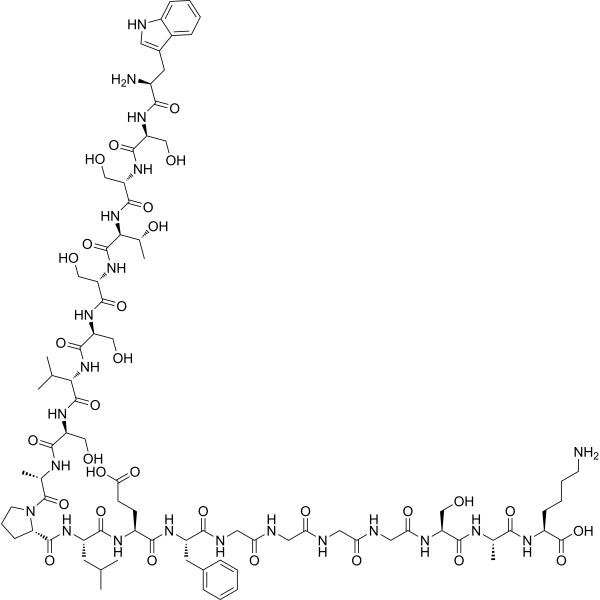 0 ImagesCat. No.: HY-P5422Caloxin 3A1 is a biological active peptide. (This peptide belongs to caloxins, the extracellular plasma membrane (PM) Ca2+ pump inhibitors. Caloxin 3A1 inhibits plasma membrane calcium pumps (PMCAs) but not the sarcoplasmic reticulum Ca2+-pump. This peptide does not inhibit formation of the acylphosphate intermediate from ATP.)
-
Budiodarone-d10
 0 ImagesCat. No.: HY-14834SSynonyms: ATI-2042-d10Budiodarone-d10 (ATI-2042-d10) is the deuterium labeled Budiodarone (HY-14834). Budiodarone (ATI-2042) is an analogue of Amiodarone (HY-14187) with a half-life of 7 h. Budiodarone inhibits sodium, potassium, and calcium ion channels. Budiodarone is an antiarrhythmic agent and can be used for the research of atrial fibrillation.
-
VU0606170
 0 ImagesCat. No.: HY-153164CAS No.: 879054-55-4VU0606170 is a selective Slack channel inhibitor with low micromolar potency. VU0606170 can reduce the frequency of neuronal Calcium oscillations in a concentration dependent manner. VU0606170 can be used for research on diseases such as epilepsy.
-
BBR 2160
 0 ImagesCat. No.: HY-120926CAS No.: 118587-22-7BBR 2160 is a compound with cardiac electrophysiological effects and is a dihydropyridine calcium antagonist that can reduce myocardial contractility and action potential duration and has calcium antagonist properties.
-
YM-344484
 0 ImagesCat. No.: HY-182736CAS No.: 671205-14-4YM-344484 is an orally active dual antagonist of chemokine CCR3 receptor and histamine histamine H1 receptor. YM-344484 inhibits ligand-induced Ca2+ influx, chemotaxis of CCR3-expressing cells, histamine-induced Ca2+ influx, increased vascular permeability and eosinophil accumulation. YM-344484 suppresses vascular permeability and inhibits eosinophil infiltration in a mouse asthma model. YM-344484 can be used in research related to asthma, allergic rhinitis and atopic dermatitis.
-
Suloctidil hydrochloride
 0 ImagesCat. No.: HY-B1237ACAS No.: 54767-71-4Suloctidil hydrochloride is an orally active calcium channel blocker and antifungal agent. Suloctidil hydrochloride antagonizes vasoconstriction induced by norepinephrine, angiotensin and serotonin. Suloctidil hydrochloride inhibits platelet function and exhibits neuroprotective effects. Suloctidil hydrochloride exerts inhibitory effects on Candida albicans biofilm and virulence. Suloctidil hydrochloride can be used in research on vasospasm relief, antithrombosis and superficial candidiasis.
-
Huwentoxin I
 0 ImagesCat. No.: HY-P5179CAS No.: 769973-37-7Synonyms: HWTX-IHuwentoxin I (HWTX-I) is a peptide toxin that inhibits voltage-gated sodium channels and N-type calcium channels. Huwentoxin I inhibits sodium channels in rat hippocampus and cockroach dorsal unpaired median (DUM) neurons with IC50 values of 66.1 and 4.80 nM, respectively.
-
Budiodarone
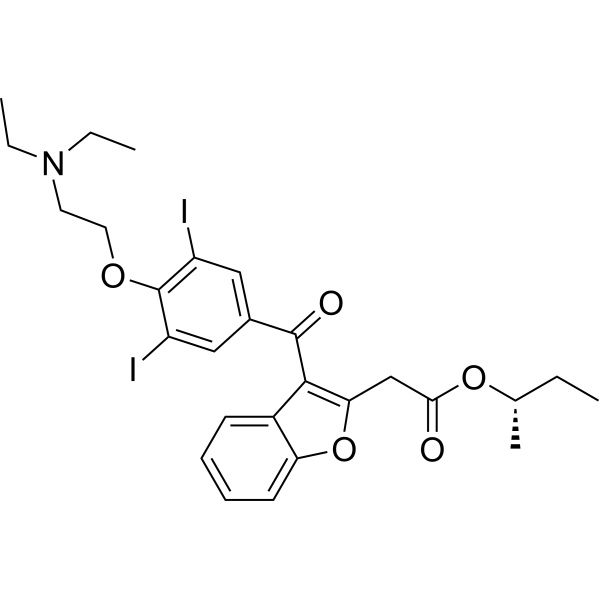 0 ImagesCat. No.: HY-14834CAS No.: 335148-45-3Synonyms: ATI-2042Budiodarone (ATI-2042) is an analogue of Amiodarone (HY-14187) with a half-life of 7 h. Budiodarone inhibits sodium, potassium, and calcium ion channels. Budiodarone is an antiarrhythmic agent and can be used for the research of atrial fibrillation.
-
Minocycline-d6 hydrochloride
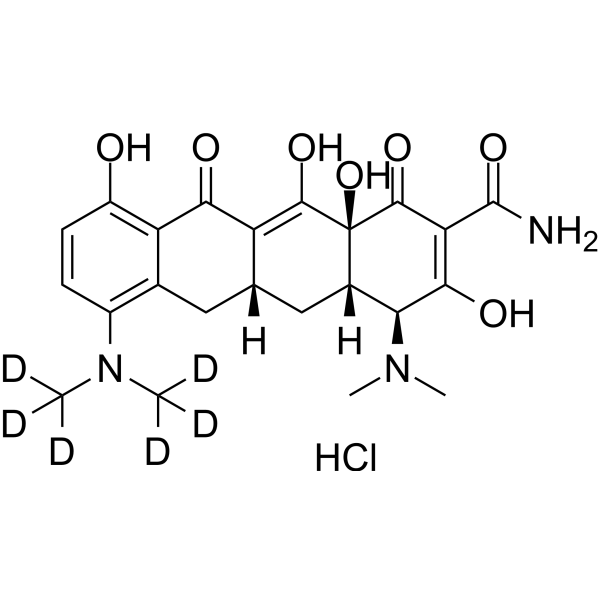 0 ImagesCat. No.: HY-17412SCAS No.: 1035979-33-9Minocycline-d6 hydrochloride is deuterated labeled Minocycline hydrochloride (HY-17412). Minocycline hydrochloride is an orally active, potent and BBB-penetrated semi-synthetic tetracycline antibiotic. Minocycline hydrochloride is a hypoxia-inducible factor (HIF)-1α inhibitor. Minocycline hydrochloride shows anti-cancer, anti-inflammatory, and glutamate antagonist effects. Minocycline hydrochloride reduces glutamate neurotransmission and shows neuroprotective properties and antidepressant effects. Minocycline hydrochloride inhibits bacterial protein synthesis through binding with the 30S subunit of the bacterial ribosome, resulting in a bacteriostatic effect.
-
N-type calcium channel blocker-1
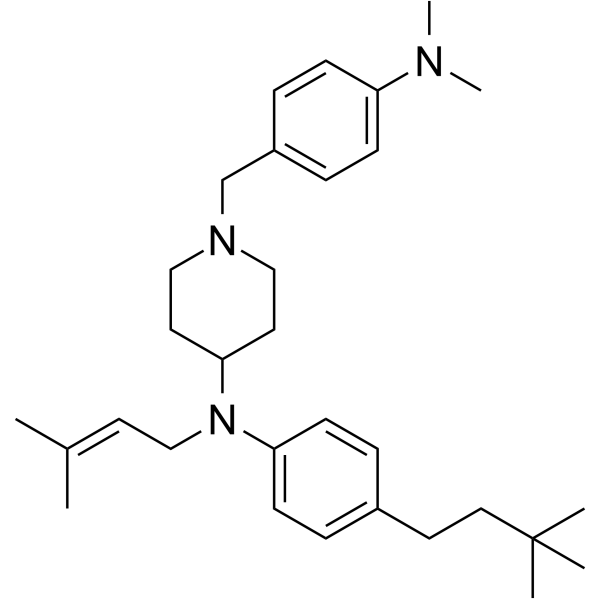 0 ImagesCat. No.: HY-100310CAS No.: 241499-17-2N-type calcium channel blocker-1 is an orally active compound which shows high affinity to functionally block N-type calcium channels with an IC50 of 0.7 μM in the IMR32 assay.
-
Calcium Channel antagonist 6
 0 ImagesCat. No.: HY-169845CAS No.: 687568-35-0Calcium Channel antagonist 6 (Compound 328) is a highly selective antagonist of voltage-gated calcium channel CaV2.2 with an IC50 value of 0.37 μM. Calcium Channel antagonist 6 inhibits of neuron depolarization-induced Ca2+ influx. Calcium Channel antagonist 6 is promising for research of neuropathic pain.
-
Cav 3.2 inhibitor 1
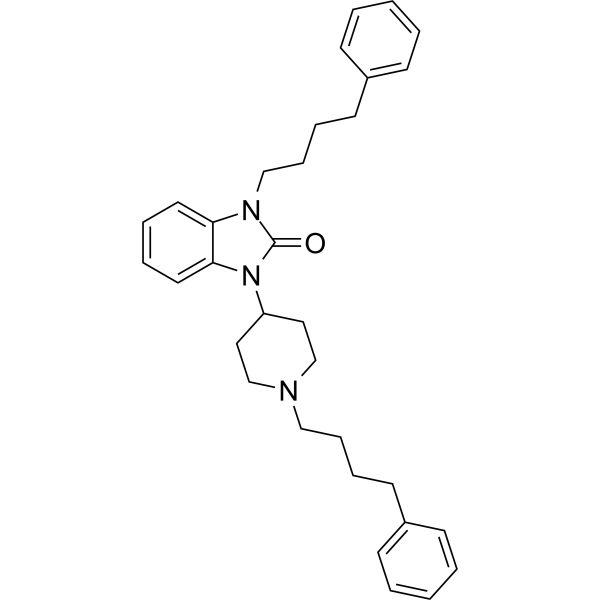 0 ImagesCat. No.: HY-151450CAS No.: 2878598-59-3Cav 3.2 inhibitor 1 is a T-type calcium channel inhibitor with little binding affinity to dopamine D2 receptors. Cav 3.2 inhibitor 1 can be used for the research of somatic and visceral pain.
-
Cinchonine (Standard)
 0 ImagesSynonyms: (8R,9S)-Cinchonine (Standard); LA40221 (Standard)Cinchonine (Standard) is the analytical standard of Cinchonine. This product is intended for research and analytical applications. Cinchonine is a natural compound present in Cinchona bark with antimalarial, antitumor, anti-inflammatory, anti platelet-aggregation and anti-obesity properties. Cinchonine inhibits cells proliferation and autophagy and induces apoptosis through activation of Caspase-3. Cinchonine activates endoplasmic reticulum stress-induced apoptosis in human liver cancer cells.
-
Cinnarizine-d8
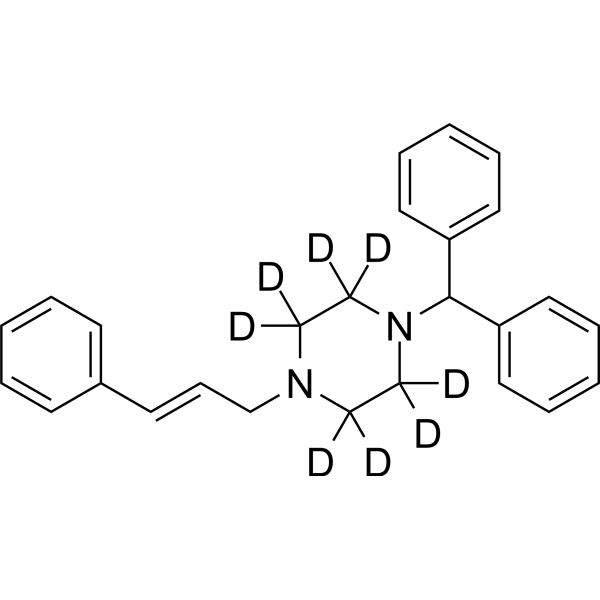 0 ImagesCinnarizine-d8 is a deuterium labeled Cinnarizine. Cinnarizine is an antihistamine and a calcium channel blocker.
-
Multitarget AD-IN-4
 0 ImagesCat. No.: HY-180891Multitarget AD-IN-4 (compound IIIj) is a multitarget-directed ligand (MTDL), with the ability to simultaneously inhibit ChE enzymes (EeAChE IC50 = 0.157 μM, eqBuChE IC50 = 0.147 μM, hAChE IC50 = 1.551 μM, hBuChE IC50 = 2.152 μM), exhibit antioxidant activity, provide neuroprotection, and inhibit calcium channels (Ca2+ channel blockade: IC50 = 30.59 μM). Multitarget AD-IN-4 reverses Scopolamine (HY-N0296)-induced amnesia in a mouse model. Multitarget AD-IN-4 can be used for Alzheimer’s disease (AD) research.
-
SAS-0132
 0 ImagesCat. No.: HY-119386CAS No.: 1644629-60-6SAS-0132 is a selective Sigma 2 receptor (Sig2R) antagonist (Ki: 90 nM) that can cross the blood-brain barrier. SAS-0132 is capable of regulating intracellular Ca2+ levels and modulating PGRMC1-related pathways. SAS-0132 exhibits neuroprotective activity and can improve cognitive impairment in Alzheimer's disease mice. SAS-0132 can be used in the research of neurocognitive disorders such as Alzheimer's disease.
-
Ethacrynic acid D5
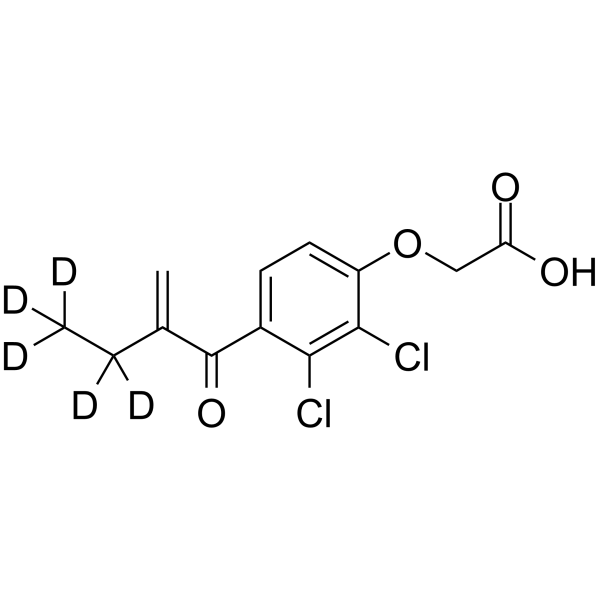 0 ImagesCat. No.: HY-108538CAS No.: 1330052-59-9Ethacrynic acid D5 is a deuterium labeled Ethacrynic acid. Ethacrynic acid is a diuretic. Ethacrynic acid is an inhibitor of glutathione S-transferases (GSTs). Ethacrynic acid is a potent inhibitor of NF-kB-signaling pathway, and also modulates leukotriene formation. Ethacrynic acid also inhibits L-type voltage-dependent and store-operated calcium channel, leading to relaxation of airway smooth muscle (ASM) cells. Ethacrynic acid has anti-inflammatory properties that reduces the retinoid-induced ear edema in mice.
-
Nexopamil
 0 ImagesNexopamil is a calcium antagonist of Ca2+ channel, 5HT2, 5HT1A, 5HT1C and dopamine D2 receptors. Nexopamil exhibits vasodilatory, cardioprotective, and platelet aggregation inhibiting effects. Nexopamil can be used for researches of stable or unstable angina and possibly of peripheral arterial occlusive disease.
-
Calcium Channel antagonist 1
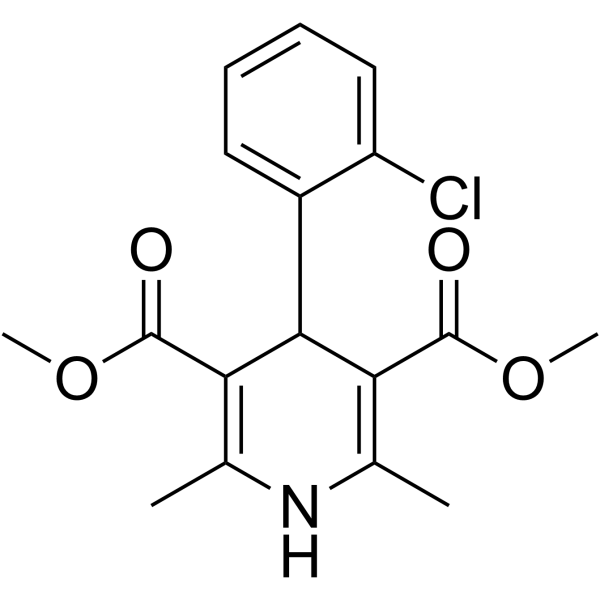 0 ImagesCat. No.: HY-W278072CAS No.: 43067-01-2Calcium Channel antagonist 1 is an antagonist of Calcium Channel Calcium Channel antagonist 1 has the potential for the research of neurology disease.
-
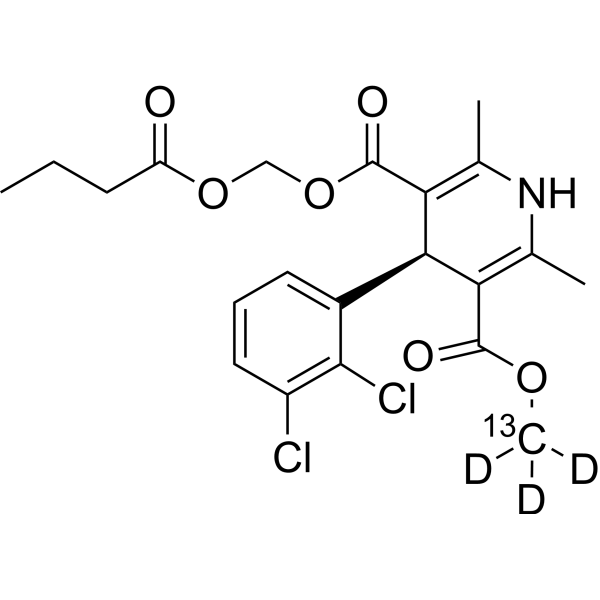
(R)-Clevidipine-13C,d3
 0 ImagesCat. No.: HY-17436S3(R)-Clevidipine-13C,d3 is the deuterium and 13C labeled Clevidipine. Clevidipine is a short-acting dihydropyridine calcium channel antagonist (IC50= 7.1 nM, V(H) = -40 mV ) under development for treatment of perioperative hypertension.




